
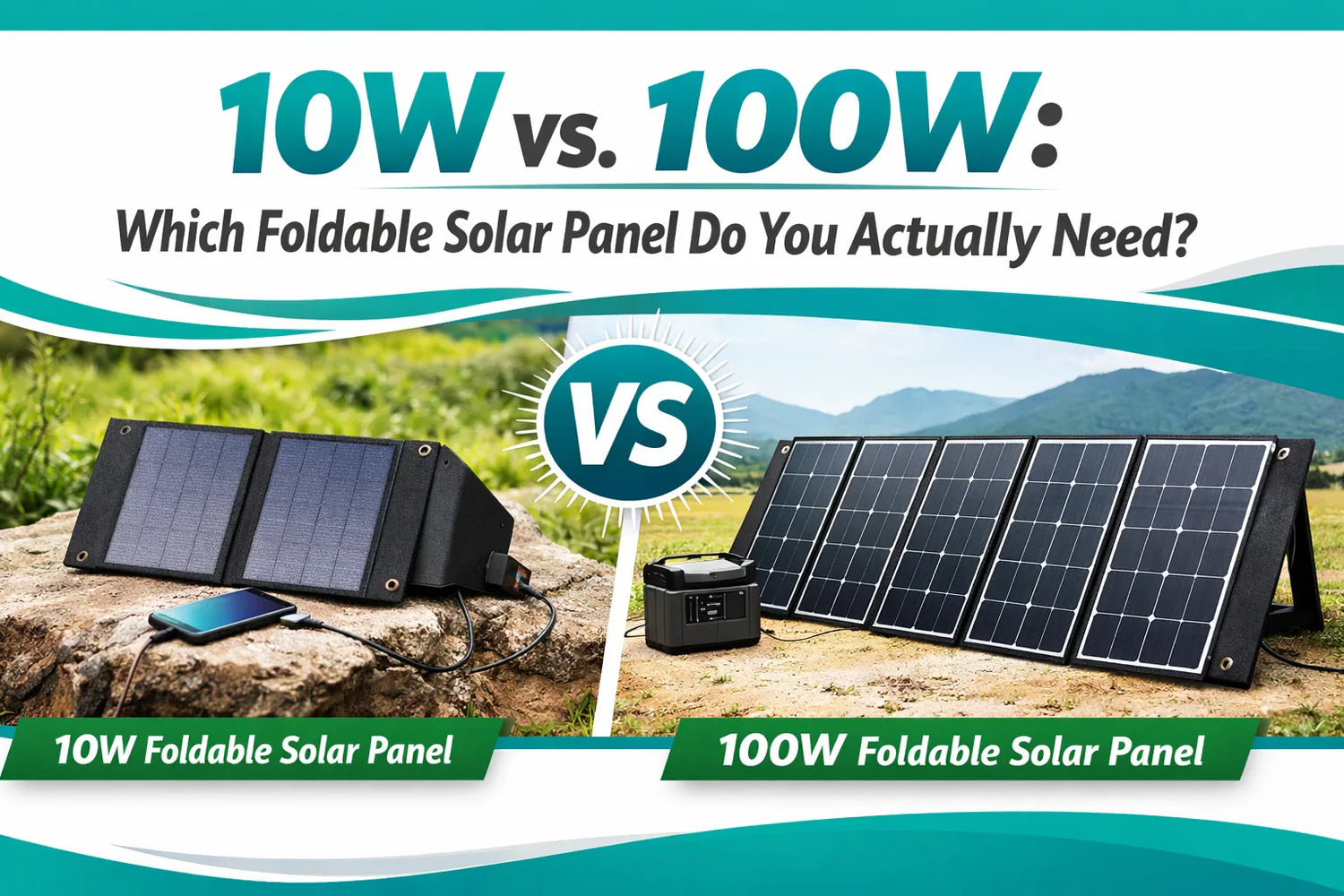
You are standing in front of two foldable solar panels at a store. One is the size of a tablet. One is the size of a small suitcase. The price difference? Significant. The confusion? Even bigger.
This is one of the most common mistakes Indian solar buyers make picking a panel based on price alone, without understanding what wattage actually means for their use case. A 10W panel charging a laptop is like filling a swimming pool with a garden hose. A 100W panel for just a phone is like using a fire hose to fill a glass.
This guide breaks down the real-world difference between low-wattage and high-wattage foldable solar panels and gives you a simple way to figure out exactly what you need.
What Does Solar Panel Wattage Actually Mean?
Wattage is simply the rate at which a solar panel can generate electricity under ideal conditions. Higher wattage = more power generated per hour of sunlight.
But here is what most product listings do not tell you the rated wattage (like '100W') is the maximum output under perfect lab conditions. Real-world output in Indian sunlight is typically 70-80% of the rated figure due to heat, angle, and atmospheric conditions.
Simple Wattage Guide
- 1W-5W: Charges a smartwatch or earbuds slowly
- 10W-20W: Charges a smartphone in 2-3 hours under direct sunlight
- 40W-60W: Charges tablets, small laptops, and power banks at a practical pace
- 80W-100W: Charges laptops, large power stations, and multiple devices simultaneously
- 120W-200W: Professional use camping setups, RVs, or off-grid small homes
| The golden rule: match your panel wattage to the wattage of your device's charger. If your laptop charger says 65W, you need at least an 80W panel in real conditions to keep up.
The 10W Foldable Solar Panel Who Is It Really For?

A 10W solar panel is compact, light, and affordable. It fits in a backpack without you noticing it. But and this matters its use cases are genuinely limited.
What a 10W Panel Can Do
- Charge a smartphone from 0-100% in approximately 3-4 hours of peak sunlight
- Top up wireless earbuds, fitness bands, or a smartwatch
- Slowly trickle-charge a small 5,000mAh power bank over a full sunny day
- Power a small USB LED light or fan continuously
What a 10W Panel Cannot Do
- Charge a laptop 10W is far below the 45W-90W that laptops require
- Charge a power bank quickly enough for same-day laptop use
- Power multiple devices simultaneously without a significant slowdown
- Provide meaningful output on partially overcast days
The 100W Foldable Solar Panel When Does It Actually Make Sense?

A 100W foldable solar panel is a serious piece of equipment. It is larger and heavier than a 10W panel, but it is also in a completely different league in terms of what it can power.
What a 100W Panel Can Do?
- Charge a laptop (45W-90W) at a practical pace in 3-5 hours of direct Indian sunlight
- Charge a 20,000mAh power bank in approximately 4-6 hours
- Power a solar power station or portable generator for off-grid use
- Charge multiple devices simultaneously laptop + phone + tablet via a power station
- Run small DC appliances like fans, LED strips, or a router through a charge controller
What a 100W Panel Is Not Ideal For
- Solo phone charging massive overkill. Like hiring a truck to carry a lunchbox.
- Ultralight trekking at 1-2 kg, it is too heavy if every gram matters
- Casual day trips where a phone battery is all you need
10W vs 100W Foldable Solar Panel Head-to-Head Comparison

Here is the full comparison at a glance. This is the table to bookmark before you buy:
| Feature | 10W Foldable Panel | 100W Foldable Panel |
| Best for | Phones, earbuds, small devices | Laptops, tablets, power stations |
| Real Output in India | 7-8W in peak sun | 70-80W in peak sun |
| Phone Charge Time | 3-4 hours | Under 1 hour |
| Laptop Charging | Not suitable | 3-5 hours (with power bank) |
| Weight | 200-350 grams | 1-2 kg |
| Folded size | Tablet-sized | Like a small suitcase |
| Price range (India) | ₹1,200 - ₹2,500 | ₹6,000 - ₹15,000 |
| Best use case | Day treks, casual outdoor use | Remote work, camping, off-grid setup |
| Portability | Excellent – fits in any bag | Good – needs its own carry case |
| Modern Pick | 10W for phone-only users | 100W for laptop & multi-device users |
What About the Middle Ground? The 40W-60W Sweet Spot
Here is what most comparison articles skip: the best foldable solar panel for the average Indian buyer is probably neither 10W nor 100W.
A 40W-60W foldable panel hits the sweet spot for most use cases:
- Heavy enough to charge most ultrabooks (MacBook Air, Dell XPS, ThinkPad) slowly but reliably
- Light enough for multi-day treks and travel backpacks typically under 800 grams
- Price range: Rs. 3,500 - Rs. 7,000 reasonable for most buyers
- Charges a phone in under 1.5 hours, a power bank in 4-5 hours
- More reliable on partially overcast days than a 10W panel
Moerdon recommends the 40W-60W range as the first-time buyer default unless you specifically need to charge a high-power laptop or just want phone charging on day trips.
How Do You Choose the Right Wattage for Your Needs?
Two minutes and three questions. That is all it takes to figure out the right panel.
- What is the highest-wattage device you need to charge? Check the output wattage on its charger. That number is your target. Your panel needs to deliver at least 20-30% more than that in real-world conditions.
- How portable does the panel need to be? Day trek = as light as possible. Multi-day camp = moderate weight okay. Fixed rooftop = weight does not matter.
- How many devices do you need to charge at once? One device = lower wattage is fine. Multiple devices simultaneously = go higher. A 100W panel with a power station handles everything at once.
|
Moerdon Recommendation by Use Case
|
Expert Tips from MoerdonStore
- Always Check the Output Port Not Just the Wattage
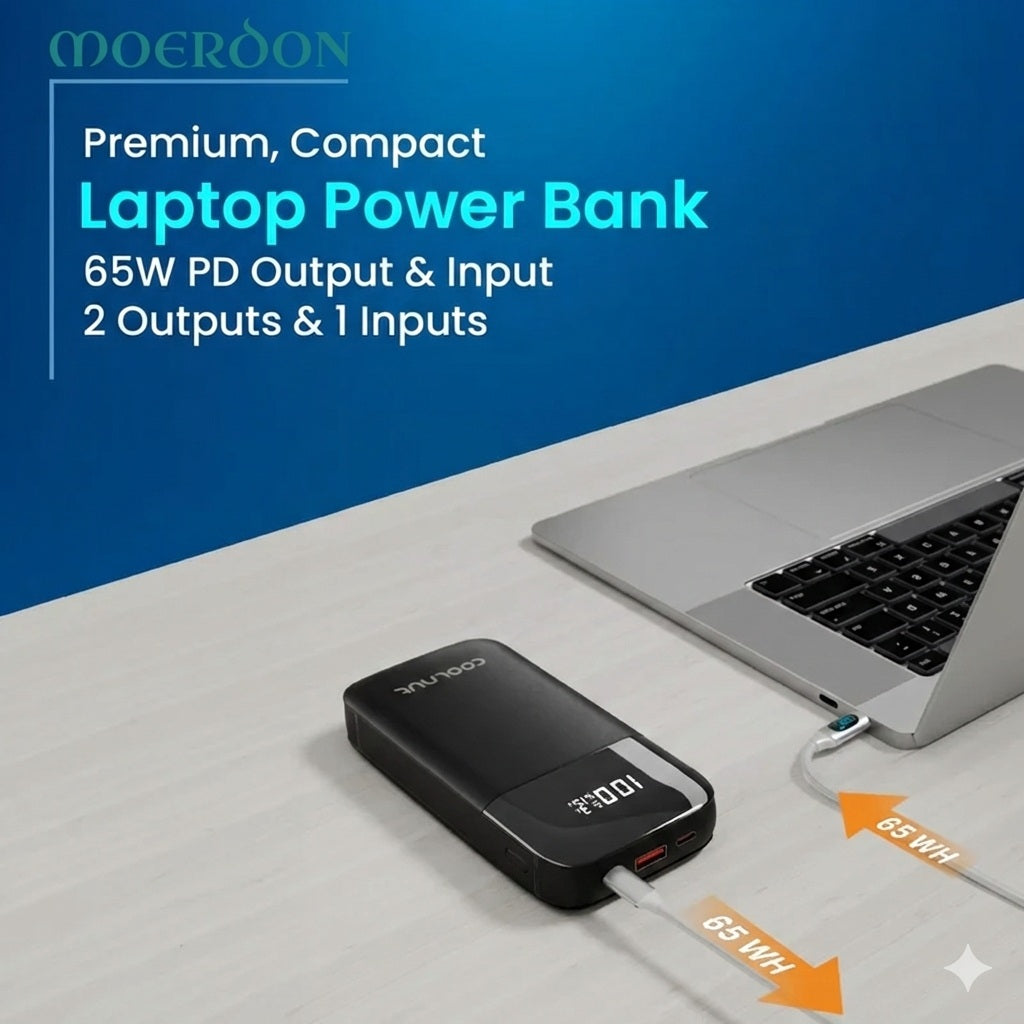
A 100W panel with only USB-A output cannot charge a modern laptop. Look for USB-C PD (Power Delivery) output rated at 65W or higher. This single spec matters more than the wattage number on the box.
- Real Output Is Always Less Than Rated Output
In Indian summer heat (35°C+), panel efficiency drops by 10-20%. Always buy 20-30% more wattage than your device needs so a 65W laptop charger user should get an 80W-100W panel, not a 65W panel.
- Pair Your Panel with a Power Bank Not a Direct Connection
Connecting a solar panel directly to a laptop or phone risks voltage spikes from fluctuating sunlight. Always route solar power through a power bank or MPPT charge controller first. It protects your devices and gives you stored energy for when clouds pass.
- Monocrystalline Cells Only for Indian Conditions
India's heat reduces polycrystalline panel efficiency significantly. Moerdon stocks exclusively monocrystalline foldable panels, which perform 25-30% better than polycrystalline in the same conditions. Do not compromise on cell type when buying in India.
Common Buying Mistakes to Avoid When Buying Solar Panel
- Buying by Price, Not by Wattage Need: Calculate your wattage need first. Then find the best panel at that wattage.
- Assuming All 100W Panels Are Equal: Look for panels with lab-tested efficiency ratings (21%+) and monocrystalline cells.
- Ignoring the Connector Compatibility: Before buying, check: what output ports does the panel have? MC4, DC barrel, or USB-C PD? Does it match your power bank's input?
Also Read: Ultimate Guide to Buying Portable Solar Panels Online
Key Takeaways
10W solar panels are for phones and small devices only they cannot charge laptops or power banks quickly enough for practical multi-day use. 100W panels are the right choice for laptop charging, multi-device use, and off-grid setups but are overkill for phone-only users.
The 40W-60W range is the best all-rounder for most Indian buyers balancing portability, output, and price for the widest range of everyday use cases.
Always buy 20-30% more wattage than your device's charger rating real-world Indian conditions deliver less than rated output due to heat and angle. Moerdon stocks monocrystalline foldable solar panels across all wattage ranges with real output data and compatibility information for every product.
Frequently Asked Questions
Q1: What is the difference between a 10W and a 100W solar panel?
A: A 10W solar panel is designed for basic, low-power devices like smartphones, small batteries, or GPS units, and it charges them slowly. In contrast, a 100W solar panel delivers significantly higher output and can charge laptops, tablets, power banks, and even multiple devices at the same time.
In real-world Indian conditions, a 10W panel typically produces around 7–8W, while a 100W panel generates about 70–80W under good sunlight.
Q2: Can a 10W solar panel charge a laptop?
A: No, a 10W panel cannot charge a laptop. Most laptops require at least 45W–90W of power to charge efficiently. A 10W panel is far too weak for this purpose.
To charge a laptop, you should use at least an 80W–100W foldable solar panel with USB-C PD output.
Q3: How do I choose the right wattage solar panel for my needs?
A: Start by checking the output wattage of your device charger. Then add a buffer of 20–30% to account for real-world conditions like heat, dust, and angle of sunlight.
For example, if your laptop charger is 65W, you should choose at least an 80W solar panel. This ensures consistent and reliable charging performance outdoors.
Q4: How long does a 100W foldable solar panel take to charge a laptop?
A: A 100W foldable solar panel typically takes around 3–5 hours to charge a laptop in direct Indian sunlight when used with a USB-C PD power bank.
Ultrabooks may charge faster (2–3 hours), while high-performance or gaming laptops can take 5–6 hours due to larger battery sizes.
Q5: 10W vs 40W solar panel for trekking in India – which is better?
A: A 40W panel is a much better choice for trekking. It can charge smartphones in under 1.5 hours, works more reliably in partially cloudy conditions, and can also handle tablets and power banks.
A 10W panel is only suitable for very light use, such as charging a phone during short day trips.
Q6: 100W vs 60W foldable solar panel – which should I buy?
A: Choose a 60W panel if you want a lightweight and portable option for travel and occasional laptop charging.
Go for a 100W panel if you need more power for charging multiple devices, running high-wattage laptops, or charging power stations more reliably.
Q7: What is the best foldable solar panel for charging a laptop in India?
A: The ideal choice is an 80W–100W monocrystalline foldable solar panel with USB-C PD output (preferably 65W or higher).
For best results, pair it with a 20,000mAh or larger USB-C power bank to ensure stable charging even when sunlight fluctuates.
Q8: Do foldable solar panels work on cloudy days in India?
A: Yes, foldable solar panels do work on cloudy days, but their efficiency drops by around 40–60%.
For example, a 100W panel may produce only 40–60W under cloudy conditions. This is sufficient for charging phones and power banks, but laptop charging will be slower. During monsoon months, using a higher wattage panel is recommended for better performance.


Leave a comment
This site is protected by hCaptcha and the hCaptcha Privacy Policy and Terms of Service apply.