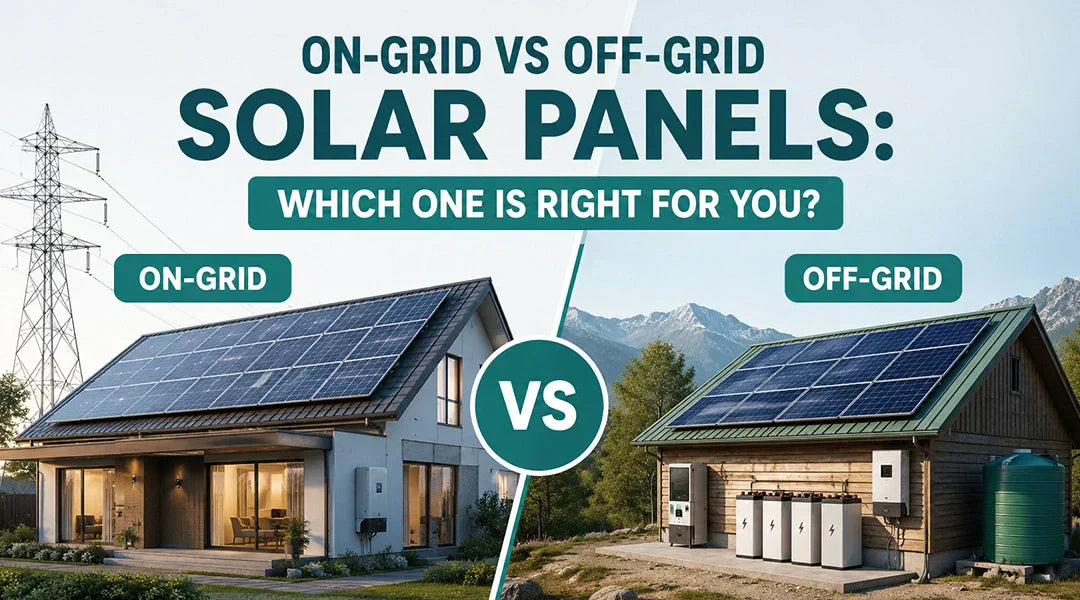
If you are confused between on-grid vs off-grid solar panels, the simple answer is this: on-grid solar is best for homes with stable electricity and a lower budget, while off-grid solar is best for remote areas or places with frequent power cuts.
An on-grid setup connects with the local electricity grid and helps reduce electricity bills through net metering. An off-grid setup works independently with batteries, so it can give power even when grid electricity is not available.
For most city homes in India, on-grid solar is more practical. For farmhouses, villages, and remote homes, off-grid solar can be a better choice.
Small Safety Disclaimer:
Solar installation involves electrical work. Always consult a certified solar installer or licensed electrician before buying or installing any solar system.
What Is an On-Grid Solar System?
An on-grid solar system, also known as a grid-tied solar system, is connected directly to the local electricity grid. It uses solar panels to generate power for your home and sends extra electricity back to the grid.
This system is also called a grid-tied solar system or grid-tied solar system. Tata Power explains that on-grid systems use solar panels, an inverter, an electrical panel, and net metering to supply power and export extra electricity to the grid.
How On-Grid Solar Panels Work
Solar panels collect sunlight and convert it into DC electricity.
The inverter convert this DC power into AC power, which your home appliances can use.
When solar power is less, your home takes power from the grid. When solar power is extra, it can go back to the grid.
Best for: A family in Ahmedabad has a high electricity bill but very few power cuts. For this family, on-grid solar is better. It can reduce bills and does not need battery investment.
Main Components of an On-Grid Solar System
An on-grid setup usually includes:
- Solar panels
- On-grid inverter
- Mounting structure
- AC/DC cables
- Net meter or bi-directional meter
- Protection devices
It does not normally need a battery, which makes it more affordable.
What Happens to Extra Solar Power?
If your solar panels make more power than your home uses, the extra power goes to the electricity grid. This extra export can reduce your bill, depending on local net metering or net billing rules.
Role of Net Metering in On-Grid Solar
In a net metering solar system, solar power is first used at home. Extra power is exported to the grid. When solar power is not enough, power is taken from the grid.
The official rooftop solar FAQ says a bi-directional or net meter records both import and export, and the user pays only for net energy used.
Where On-Grid Solar Systems Are Commonly Used
On-grid solar is commonly used in:
- Homes and residential buildings
- Commercial offices and shops
- Industries and factories
- Schools, colleges, and institutions
- Hospitals and clinics
- Apartments and housing societies
- Warehouses and commercial complexes
- Government buildings
- Hotels and resorts
What Is an Off-Grid Solar System?

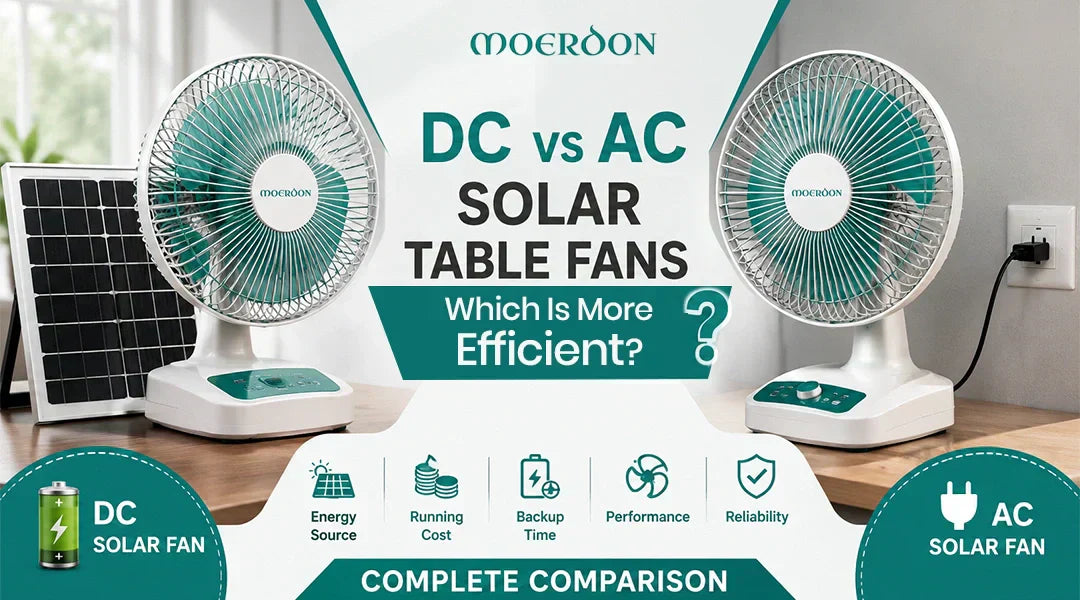
An off-grid solar system works without connecting to the electricity grid. Small appliances like a solar table fan can also run efficiently on off-grid solar setups. This type of system is also called a standalone solar power system. It is useful where grid power is not available or not reliable. For Residential solar users, government schemes can make rooftop solar more affordable.
How Off-Grid Solar Panels Work
Solar panels generate electricity during the day. This power runs your appliances and also charges the battery. At night or during cloudy weather, your home uses stored battery power.
Best for: A farmhouse owner has weak grid supply and long power cuts. For this case, off-grid solar is better because it stores power in batteries and works without depending on the grid.
Main Components of an Off-Grid Solar System
An off-grid setup usually includes:
- Solar panels
- Off-grid inverter
- Solar battery
- Charge controller
- Mounting structure
- Cables and protection devices
Because batteries are included, the cost is usually higher.
Why Batteries Are Important in Off-Grid Solar
Batteries store extra solar power. This stored energy can power devices such as light bulbs and mobile chargers during power cuts. Without batteries, an off-grid system cannot give power at night. Battery size should be selected carefully. If the battery is too small, it may not run your appliances for long.
Where Off-Grid Solar Systems Are Commonly Used
Off-grid solar is commonly used in:
- Villages
- Farmhouses
- Remote homes
- Agricultural sites
- Forest areas
- Places with weak grid supply
- Homes with long power cuts
It is a good option for solar power for rural homes.
On-Grid vs Off-Grid Solar Panels: Key Difference at a Glance
|
Factor |
On-Grid Solar |
Off-Grid Solar |
|
Connection |
Connected to utility grid |
Independent system |
|
Battery Requirement |
Usually not required |
Mandatory |
|
Electricity Backup |
No backup during outage |
Full backup available |
|
Net Metering |
Available |
Not available |
|
Ideal For |
Urban homes & businesses |
Remote areas |
|
Energy Storage |
No |
Yes |
|
Power Independence |
Partial |
Complete |
|
Cost |
Lower. Because On-grid solar does not usually need batteries |
Higher. Because off-grid solar needs batteries, and batteries increase the total project cost. |
|
Maintenance |
Lower |
Higher due to the battery |
|
Main Benefit |
Bill saving. On-grid solar gives better savings where electricity bills are high, and grid supply is stable. |
Energy independence. Off-grid solar gives value where electricity is not available or power cuts are very long. |
Pros and Cons of On-Grid Solar Panels
On-grid systems are usually the most cost-effective choice because they avoid battery storage costs. Enphase also describes on-grid systems as having lower upfront costs compared with off-grid and hybrid options.
|
Advantages of On-Grid Solar System |
Disadvantages of On-Grid Solar System |
|
Lower installation cost |
Depends on the electricity grid |
|
No battery required |
Upfront cost - high initial cost during installation |
|
Net metering benefit |
Net metering rules may vary by state |
|
Good for city homes |
Not ideal for remote places without grid access |
|
Lower maintenance |
Roof restriction - strong roof required |
|
Helps reduce monthly electricity bills |
Needs DISCOM approval |
|
Suitable for a rooftop solar system in India |
Does not work during power cuts without backup |
Pros and Cons of Off-Grid Solar Panels
Off-grid systems are useful where electricity access is weak or unavailable.
|
Advantages of Off-Grid Solar System |
Disadvantages of Off-Grid Solar System |
|
Works without the electricity grid |
Higher installation cost |
|
Good for remote areas |
Battery maintenance needed |
|
Gives energy independence |
Battery replacement cost |
|
Useful during power cuts |
Proper load planning is important |
|
Stores power in batteries |
Backup depends on battery size |
|
Helpful for farmhouses and rural homes |
May need a generator in long cloudy weather |
Common Mistakes to Avoid While Choosing a Solar System
Many people make mistakes while selecting solar. Avoid these to save money and stress.
- Choosing Only Based on Price: The cheapest system may not be the best. Check quality, warranty, and service also.
- Ignoring Battery Cost: In off-grid and hybrid systems, battery cost can be a major part of total cost.
- Not Checking Net Metering Rules: Net metering rules vary by state and DISCOM. Always check local approval before buying.
- Not Calculating Daily Power Load: Your system size should match your daily electricity use. Wrong load calculation can reduce performance.
- Choosing the Wrong Solar Inverter: The inverter should match your system type: on-grid, off-grid, or hybrid.
Conclusion:
For most city homes, on-grid solar panels are more practical and budget-friendly. They help reduce electricity bills and do not usually need batteries. For remote homes, farms, and places without reliable electricity, off-grid solar panels are better because they work independently with battery backup. If you want both bill savings and solar power during power cuts, a hybrid solar system can be the smartest option.
Still confused about the right solar system for your home or business?
Connect with Moerdonstore today for expert guidance on solar panels, inverter options, battery backup, installation cost, and the best system for your location.
📞 Call now, fill the inquiry form, or WhatsApp Moerdonstore to get the right solar solution for your home.
Get Free ConsultationFrequently Asked Questions
Which is better, on-grid or off-grid solar?
On-grid solar is better for most city homes because it is cheaper, easier to maintain, and helps reduce electricity bills. Off-grid solar is better for remote areas where grid electricity is not available or power cuts are very frequent.
Can on-grid solar work during power cuts?
Usually, on-grid solar does not work during power cuts because it shuts down for safety. If you want solar power during outages, you may need a hybrid solar system or a battery backup solution with proper installation.
Is battery required for on-grid solar?
No, a battery is not usually required for an on-grid solar system. The system uses the electricity grid as support. Batteries are mainly needed in off-grid or hybrid systems where backup power is important.
Why is off-grid solar more expensive?
Off-grid solar is more expensive because it needs batteries, charge controllers, and careful load planning. Battery cost, maintenance, and future replacement also increase the total investment compared to a normal on-grid solar system.
Which solar system is best for home use?
For most homes with stable electricity, on-grid solar is the best choice. For homes with frequent power cuts, hybrid solar is better. For remote homes without grid connection, off-grid solar is the right option.
Can I convert an on-grid solar system to off-grid later?
Yes, but it is not a simple change. You may need batteries, a different inverter, charge controller, wiring changes, and expert approval. It is better to plan your backup needs before installing the system.
What is the difference between off-grid and hybrid solar?
Off-grid solar works fully without the electricity grid and depends on batteries. Hybrid solar connects to the grid and also uses batteries. Hybrid gives both bill savings and backup, while off-grid gives full energy independence.
Which solar system should I choose if my area has daily power cuts?
If your area has daily power cuts but grid connection is available, choose a hybrid solar system. It can reduce your bill and also provide battery backup when grid electricity is not available.
Is on-grid solar good for Indian homes?
Yes, on-grid solar is good for many Indian homes with stable electricity. It is usually cheaper than battery-based systems, supports bill savings, and may work with net metering and government subsidy rules.

Leave a comment
This site is protected by hCaptcha and the hCaptcha Privacy Policy and Terms of Service apply.