
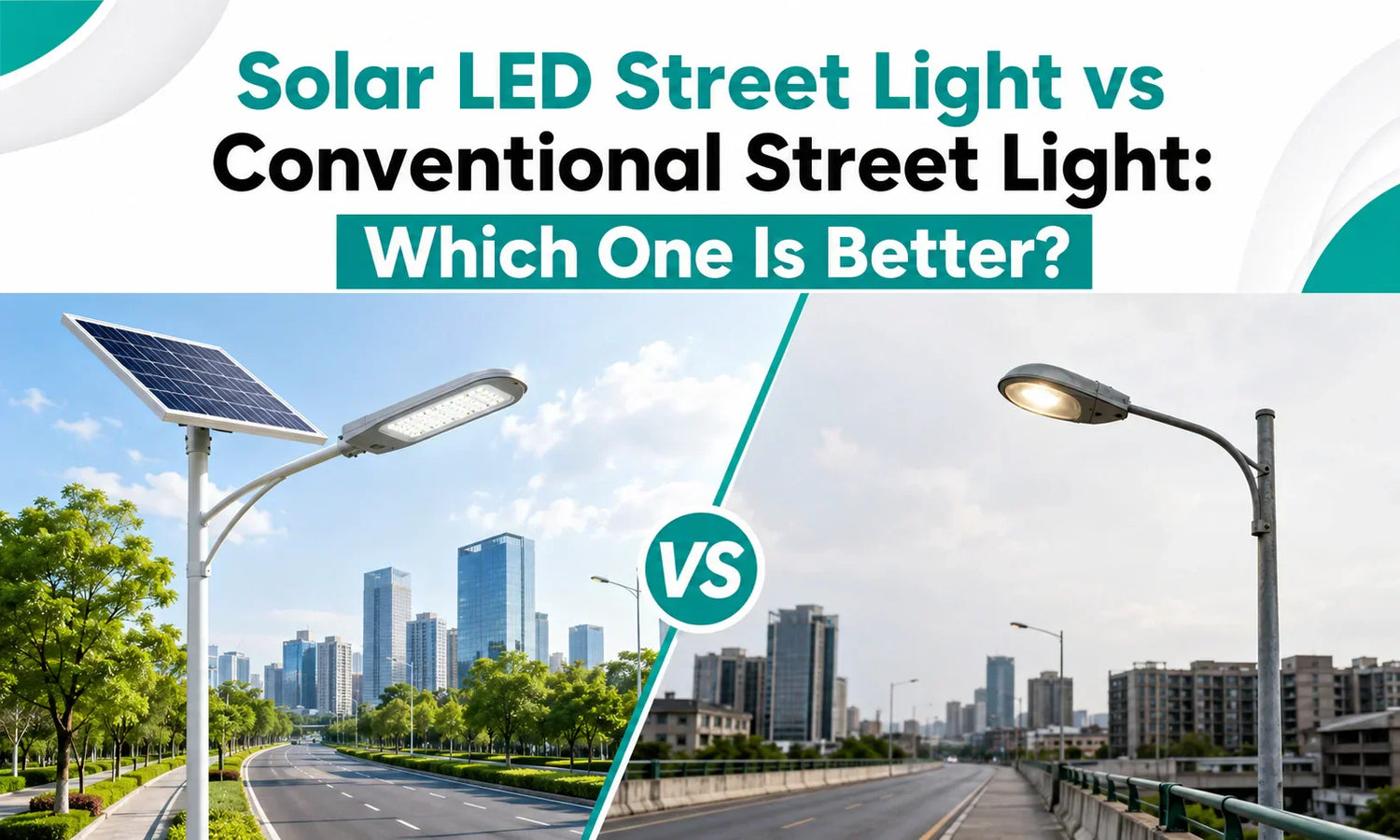
Street lighting plays a vital role in ensuring safety, visibility, and security in public spaces. From residential communities and highways to industrial zones and commercial complexes, proper illumination helps reduce accidents, improve traffic flow, and enhance overall public safety.
As technology advances and sustainability becomes a priority, many municipalities, businesses, and property owners are comparing solar LED street lights with traditional or conventional street lighting systems. The question often arises: Which one is better—solar LED street lights or conventional street lights?
The answer depends on several factors, including installation costs, maintenance requirements, energy efficiency, environmental impact, and long-term savings. This comprehensive guide explores both lighting solutions in detail to help you make an informed decision.
What Are Solar LED Street Lights?
Solar LED street lights are outdoor lighting systems powered by solar energy. These systems use photovoltaic (PV) panels to convert sunlight into electricity, which is stored in rechargeable batteries and used to power LED lights during nighttime.
A typical solar LED street light consists of:
- Solar panel
- LED luminaire
- Rechargeable battery
- Charge controller
- Pole and mounting structure
- Smart sensors (optional)
Since they operate independently of the electrical grid, solar street lights are considered an eco-friendly and cost-effective lighting solution.
What Are Conventional Street Lights?
Conventional street lights rely on electricity supplied through the power grid. These systems may use various lighting technologies, including:
- High-Pressure Sodium (HPS) lamps
- Metal Halide lamps
- Fluorescent lamps
- Grid-powered LED lights
Traditional street lighting requires underground cabling, transformers, electrical connections, and continuous utility power.
Also Read: On-Grid vs Off-Grid Solar Panels
Solar LED Street Light vs Conventional Street Light: Quick Comparison
Solar LED Street Lights vs Conventional Street Lights: A Detailed Comparison

1. Energy Efficiency:
Solar LED Street Lights
Solar LED systems are highly energy-efficient because they combine renewable solar power with LED technology. LEDs consume significantly less energy than traditional lighting solutions while delivering superior brightness.
Benefits include:
- Lower energy consumption
- Better illumination quality
- Reduced energy wastage
- High luminous efficacy
Many modern solar street lights also include motion sensors and adaptive brightness controls, further improving efficiency.
Conventional Street Lights
Traditional lighting systems often consume more electricity, especially when using HPS or metal halide lamps. Even grid-powered LED street lights depend on utility electricity, resulting in ongoing energy expenses.
Winner: Solar LED Street Lights
Solar-powered LEDs provide the highest level of energy efficiency while eliminating dependence on grid electricity.
2. Installation Cost:
Solar LED Street Light Installation
Solar LED street lights have a higher initial cost because they include solar panels, batteries, a charge controller, and LED fixtures. However, installation is simpler since no underground wiring or grid connection is required, reducing labor and infrastructure costs.
Conventional Street Light Installation
Conventional street lights usually cost less upfront but require underground cabling, trenching, electrical infrastructure, and utility connections. This makes installation more complex and often increases overall project costs.
Winner: Depends on Project Location
For urban areas with existing infrastructure, conventional lighting may appear less expensive initially. For rural, remote, or large-scale projects, solar street lights often offer lower overall installation costs.
3. Operating Costs:
One of the biggest differences between these two systems lies in ongoing operational expenses.
Solar LED Street Lights
Solar street lights generate their own electricity, resulting in:
- No electricity bills
- Reduced operational costs
- Predictable expenses
Once installed, the sun provides free energy throughout the system's lifespan.
Conventional Street Lights
Grid-powered lighting incurs recurring costs such as:
- Monthly electricity charges
- Utility rate increases
- Maintenance expenses
- Infrastructure upgrades
Over time, these costs can become substantial.
Winner: Solar LED Street Lights
The absence of electricity bills makes solar lighting significantly more economical over the long term.
4. Maintenance Requirements:
Solar LED Street Lights Maintenance
Solar LED street lights are designed for long-term durability and require minimal maintenance. Routine upkeep mainly involves cleaning the solar panels to ensure efficient energy absorption, checking battery performance, and inspecting the lighting fixtures for any signs of wear. Since LED lights have a long lifespan of 50,000 to 100,000 hours, they require fewer replacements, helping reduce maintenance costs and downtime.
Conventional Street Lights Maintenance
Conventional street lights typically require more frequent maintenance because they depend on electrical infrastructure and traditional lighting components. Common maintenance tasks include replacing bulbs, repairing damaged wiring, addressing electrical faults, and maintaining transformers or other power distribution equipment. These repairs can be both time-consuming and costly, especially in large lighting networks.
Winner: Solar LED Street Lights
Lower maintenance requirements contribute to reduced ownership costs.
5. Environmental Impact:
Solar LED Street Lights and Environmental Impact
Solar LED street lights are an environmentally friendly lighting solution that operates using renewable solar energy. They help reduce carbon emissions, decrease dependence on fossil fuels, and support sustainable development goals. As a result, many cities and organizations are increasingly adopting solar lighting systems to promote greener infrastructure and meet environmental targets.
Conventional Street Lights and Environmental Impact
Conventional street lights rely on electricity supplied through the power grid, which is often generated from fossil fuels. This leads to higher carbon emissions, increased energy consumption, and a greater environmental impact. While modern grid-powered LED lights are more energy-efficient than older lighting technologies, they still depend on external power generation and do not offer the same sustainability benefits as solar-powered systems.
Winner: Solar LED Street Lights
Solar lighting is clearly the more environmentally responsible option.
6. Reliability During Power Outages
Solar LED Street Lights
Because they operate independently of the electrical grid, solar street lights continue functioning during:
- Power failures
- Grid disruptions
- Natural disasters
- Electrical emergencies
Battery storage ensures nighttime illumination even when utility power is unavailable.
Conventional Street Lights
Grid-powered systems stop working during power outages unless supported by backup generators or battery systems.
Winner: Solar LED Street Lights
Independence from the grid provides superior reliability.
7. Performance and Brightness
Many people assume solar street lights are less powerful than conventional systems. However, modern solar LED technology has changed this perception.
Solar LED Street Lights
Modern systems offer:
- High lumen output
- Uniform light distribution
- Smart dimming features
- Enhanced visibility
Advanced battery technology ensures consistent performance throughout the night.
Conventional Street Lights
Conventional lighting can provide excellent brightness but often consumes more energy to achieve similar illumination levels.
Winner: Tie
Both technologies can deliver excellent lighting performance when properly designed.
8. Lifespan Comparison
Solar LED Street Lights
Average lifespan:
- LED fixture: 50,000–100,000 hours
- Solar panel: 20–25 years
- Battery: 5–10 years (depending on type)
Conventional Street Lights
Lifespan varies based on lamp type:
- HPS lamps: 12,000–24,000 hours
- Metal halide lamps: 6,000–15,000 hours
- Grid-powered LEDs: 50,000+ hours
Winner: Solar LED Street Lights
The combination of long-lasting LEDs and durable solar panels provides excellent longevity.
9. Smart Technology Integration
Smart city initiatives are driving demand for intelligent lighting systems.
Solar LED Street Lights
Easily support:
- Motion sensors
- Dimming controls
- Remote monitoring
- IoT connectivity
- Automatic brightness adjustment
Conventional Street Lights
Smart features can be added but often require additional infrastructure and investment.
Winner: Solar LED Street Lights
Solar systems are ideal for smart city deployments.
Best Applications for Solar LED Street Lights
Solar street lighting is particularly effective for:
- Rural Roads: Areas without electrical infrastructure benefit greatly from solar-powered solutions.
- Highways: Long stretches of roadway can reduce energy expenses through solar lighting.
- Parks and Gardens: Environmentally friendly lighting enhances public spaces.
- Industrial Areas: Large facilities can significantly reduce electricity costs.
- Residential Communities: Housing societies increasingly choose solar lighting for sustainability and savings.
Best Applications for Conventional Street Lights
Conventional lighting may still be suitable for:
- Dense Urban Areas: Locations with existing electrical infrastructure.
- High-Density Commercial Districts: Areas requiring continuous high-power lighting.
- Locations With Limited Sunlight: Regions experiencing prolonged cloudy conditions may require supplemental power sources.
Cost Analysis Over 10 Years
Consider a hypothetical street lighting project:
Solar LED Street Lights
- Higher initial investment
- Minimal electricity expenses
- Lower maintenance costs
Conventional Street Lights
- Lower upfront cost
- Monthly electricity bills
- Frequent maintenance expenses
Over a 10-year period, solar LED systems often generate substantial savings despite the higher initial investment.
Many municipalities recover their investment within a few years through reduced operating costs.
Challenges of Solar LED Street Lights

While solar lighting offers many advantages, there are some considerations:
- Higher Initial Cost: The upfront investment can be greater than traditional systems.
- Battery Replacement: Batteries eventually require replacement.
- Sunlight Dependency: Performance depends on adequate solar charging conditions.
- Quality Variations: Low-quality products may not deliver expected performance.
Selecting high-quality components from reputable manufacturers is essential.
Future of Street Lighting
The future of outdoor illumination is increasingly focused on:
- Renewable energy
- Smart city infrastructure
- Energy efficiency
- Sustainability
- Reduced carbon emissions
Governments and municipalities worldwide are investing heavily in solar-powered lighting solutions to meet environmental goals and reduce operational expenses.
As battery technology continues to improve and solar panel costs decline, solar LED street lights are becoming even more attractive.
Ready to Replace Conventional Street Lights?
Make a smarter investment with MoerdonStore Solar LED Street Lights. Enjoy lower operating costs, eco-friendly performance, and dependable lighting that works even during power outages.
Call Now!Conclusion
When comparing Solar LED Street Lights vs Conventional Street Lights, solar technology emerges as the preferred choice for most modern lighting projects. It offers significant advantages in energy efficiency, sustainability, maintenance, reliability, and long-term cost savings.
While conventional street lights may still be practical in certain urban environments with established electrical infrastructure, solar LED street lights provide a future-ready solution aligned with smart city development and environmental responsibility.
For municipalities, businesses, industrial facilities, residential communities, and infrastructure developers seeking a cost-effective and sustainable lighting system, solar LED street lights represent a smart investment that delivers benefits for years to come.

Leave a comment
This site is protected by hCaptcha and the hCaptcha Privacy Policy and Terms of Service apply.