
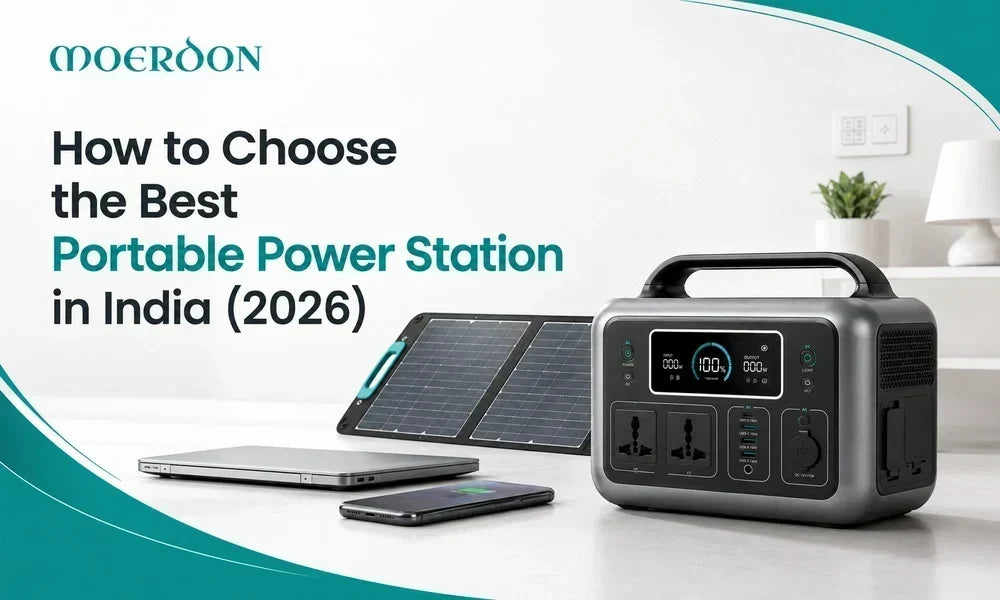
Power cuts in India are unpredictable. Whether you are working from home, going camping, shooting outdoor content or just trying to keep your family comfortable during a hot summer evening — losing power at the wrong moment is genuinely frustrating.
That is exactly where a portable power station changes everything. Silent, safe indoors, zero maintenance and no fuel required — it simply keeps your devices running without any stress.
But not every power station is worth your money. Capacity, battery quality, output power, charging speed and safety all matter before you make any decision.
So read this guide carefully. By the time you finish — you will know exactly what to look for and which portable power station is right for you. Let's get started.
What Is a Portable Power Station?
Portable power station is a rechargeable battery-powered device that can be used to power electronic devices and small appliances with AC, DC, and USB outlets. Portable power stations are different from petrol or diesel generators because:
- Produce zero emissions
- Operate silently
- Require minimal maintenance
- Can be used safely indoors
- Support solar charging
- Power multiple devices simultaneously
They are ideal for:
- Home backup
- Camping
- Road trips
- Trekking
- Outdoor events
- Remote work
- Emergency preparedness
- Field professionals
Understand Your Power Requirements First
The biggest mistake buyers make is purchasing based only on battery size. Instead, start by asking:
- What devices do you want to run?
- How many devices will operate simultaneously?
- How long do you need backup power?
Example:
| Device | Power Consumption |
|---|---|
| Smartphone | 10–20 W |
| Laptop | 45–100 W |
| LED TV | 70–150 W |
| Wi-Fi Router | 10–20 W |
| Fan | 50–80 W |
| DSLR Battery Charger | 20 W |
| CPAP Machine | 40–60 W |
| Mini Fridge | 80–150 W |
Once you know your requirements, selecting the correct power station becomes much easier.
Understand Battery Capacity (Wh)

While many buyers compare batteries using mAh, portable power stations are best compared using watt-hours (Wh) because Wh measures the total amount of usable energy the battery can store.
General guideline:
- 300–400Wh – Weekend trips, laptops, smartphones
- 500–1000Wh – Camping and outdoor work
- 1500–2500Wh – Home backup for essential appliances
- 3000Wh+ – Extended power outages and heavy-duty use
Choosing the right capacity helps avoid paying for unused battery storage while ensuring sufficient backup when needed.
You can also estimate how long a portable power station will run your devices using this simple formula:
Estimated Runtime (hours) = Battery Capacity (Wh) × 0.85 ÷ Device Power Consumption (W)
For example, a 1000Wh power station running a 100W appliance will provide approximately 8.5 hours of backup (1000 × 0.85 ÷ 100). Actual runtime may vary depending on inverter efficiency, battery condition, and the number of devices connected.
Check Continuous Output Power
Capacity determines how long your power station lasts. Output wattage determines what it can actually power.
For example: A 400W portable power station can comfortably power:
- Laptops
- Cameras
- TVs
- Routers
- Portable fans
- Mobile devices
- Projectors
- LED lighting
But it may not run:
- Electric kettles
- Microwave ovens
- Large refrigerators
- Induction cooktops
- Air conditioners
Always ensure the appliance's running wattage stays below the power station's continuous output rating.
Choose Reliable Battery Technology

Most portable power stations today use one of two battery types — Lithium-Ion (NMC) or LiFePO4 (Lithium Iron Phosphate). Lithium-Ion units are lighter and more compact but typically last only 500 to 1,000 charge cycles. LiFePO4 batteries cost 20 to 40 percent more upfront but deliver 3,000 to 5,000 cycles with superior safety and heat tolerance — making them a smarter long term investment for Indian conditions where power cuts are frequent and summers are harsh.
LiFePO4 chemistry is almost impossible to ignite through overcharging or physical damage — which makes it the safer choice for indoor home backup use. Always choose a power station with a built-in Battery Management System for overcharge, over-temperature and short circuit protection. Many modern portable power stations now feature LiFePO4 batteries with an integrated Battery Management System (BMS), offering improved safety, durability, and performance compared to older battery technologies.
Warranty and Brand Reputation
A portable power station is a long term investment — so never ignore warranty and brand reputation. Always check warranty period, customer support availability and real user reviews before finalising any purchase. Reliable brands in India typically offer warranties ranging from 2 to 5 years with proper service support.
Look for Multiple Output Ports
Modern users rarely charge just one device. Choose a power station with:
- AC outlets
- USB-A ports
- USB-C ports
- DC outputs
Multiple outputs allow simultaneous charging of smartphones, laptops, cameras, routers, lights, and other essential devices.
Portability and Weight
Capacity and weight go hand in hand. Before buying, always think about how often you will carry it and where. A unit that looks perfect on paper can feel like lifting a suitcase in real life.
Typical ranges:
- 250Wh: 3–5 kg
- 500Wh: 6–8 kg
- 1000Wh: 10–15 kg
- 2000Wh+: 20–30 kg
If you'll carry it frequently, prioritize portability alongside capacity.
Prioritize Safety Features
A portable power station sits inside your home, runs your devices and charges overnight. One product with poor safety standards can damage your devices or in worst cases cause a fire. Always choose a portable power station with:
- Battery Management System (BMS)
- Over-voltage protection
- Over-current protection
- Over-temperature protection
- Short-circuit protection
- Overload protection
These features help protect both the battery and connected devices.
Evaluate Charging Speed
A powerful battery means nothing if it takes all day to recharge. A portable power station with solar panel support offers one of the most flexible backup solutions. Most portable power stations support four charging methods—AC wall outlet, solar panels, car charger, and USB-C input. AC wall charging is the fastest, capable of fully recharging a 1000Wh power station in under 2 hours on compatible models.
Solar charging typically takes 4 to 8 hours depending on sunlight and panel wattage. Car charging via standard cigarette lighter socket is the slowest — taking 8 to 10 hours for a mid-size unit. Always check the maximum input wattage before buying — higher input means faster recharge and better readiness during back to back power cuts in India.
Which Portable Power Station Should You Buy?
For Home Backup
Choose:
- 500Wh or higher
- Multiple AC outlets
- Reliable battery management
- Fast charging
Ideal for:
- Wi-Fi routers
- Phones
- LED lights
- Fans
- Laptops
- For Camping
Prioritize:
- Lightweight design
- Solar charging support
- USB-C charging
- Quiet operation
For Content Creators
Look for:
- Multiple USB ports
- AC sockets
- Camera charging compatibility
- Long runtime
For Outdoor Professionals
Choose:
- Rugged construction
- Higher battery capacity
- Reliable continuous output
- Fast recharge capability
Common Mistakes Indian Buyers Make When Choosing a Power Station

Many Indian buyers end up regretting their purchase not because the product was bad — but because they chose the wrong one. Here are the most common mistakes to avoid before you spend your money.
- Buying solely based on price
- Ignoring output wattage
- Overestimating battery capacity needs
- Forgetting future device requirements
- Choosing products with limited safety features
- Overlooking warranty coverage
- Not checking charging compatibility
Avoiding these mistakes can save money and ensure better long-term performance.
Final Thoughts
Choosing the right portable power station is not about buying the biggest battery or the cheapest price. Every person's needs are different — a student working from home needs something different from a camper or an outdoor photographer. Think about what devices you need to run, how long you need backup and how often you will use it.
Once you are clear on that — the right choice becomes very simple. Explore Moerdon Store's full range of portable power stations — built specifically for Indian conditions with free shipping and COD available across India. Contact us today — we will help you pick the right one for your needs.
Frequently Asked Questions
Q1. What size portable power station do I need for home backup in India?
For basic home backup - Wi-Fi router, phone charging, fans and lights - a 500Wh to 1000Wh power station works well for most Indian households. For running a laptop and TV together during power cuts go for 1500Wh to 2500Wh capacity for comfortable backup.
Q2. Can a portable power station handle frequent power cuts in India?
Yes - It is designed specifically for this purpose. India faces frequent power cuts especially during summers and in semi-urban areas. A portable power station kicks in silently keeping your essential devices running for hours without any fuel noise or complicated installation.
Q3. What is the real difference between a portable power station and a UPS?
A UPS switches power instantly and gives backup for 10 minutes to 3 hours for sensitive devices like computers. A portable power station gives hours of backup for multiple devices and can also recharge via solar panels - making it far more versatile for longer outages.
Q4. How long does a portable power station last before needing replacement?
A good quality LiFePO4 power station lasts 5–15 years, handling 3000–4000+ cycles before dropping to 80% capacity. Standard lithium-ion lasts just 2–4 years (500–800 cycles). For maximum longevity, store it at 50–80% charge in a cool, ventilated space.
Q5. Which portable power station is best for Indian conditions?
Look for one built specifically for Indian needs - frequent power cuts heavy summers and dusty environments. Moerdon Store offers portable power stations starting from ₹16,999 with capacities from 222Wh to 5120Wh - made in India with free shipping and COD available nationwide.

Leave a comment
This site is protected by hCaptcha and the hCaptcha Privacy Policy and Terms of Service apply.